
Modern dentistry has advanced far beyond simple visual examinations. Today, detailed imaging technologies allow dentists to see structures beneath the surface of the teeth and gums, helping them detect conditions that may otherwise remain unnoticed.
One of the most valuable diagnostic tools used in modern dental care is panoramic imaging. Patients searching for panoramic scan dental Houston services often need more than a standard dental X-ray; they need a comprehensive view of their entire jaw structure.
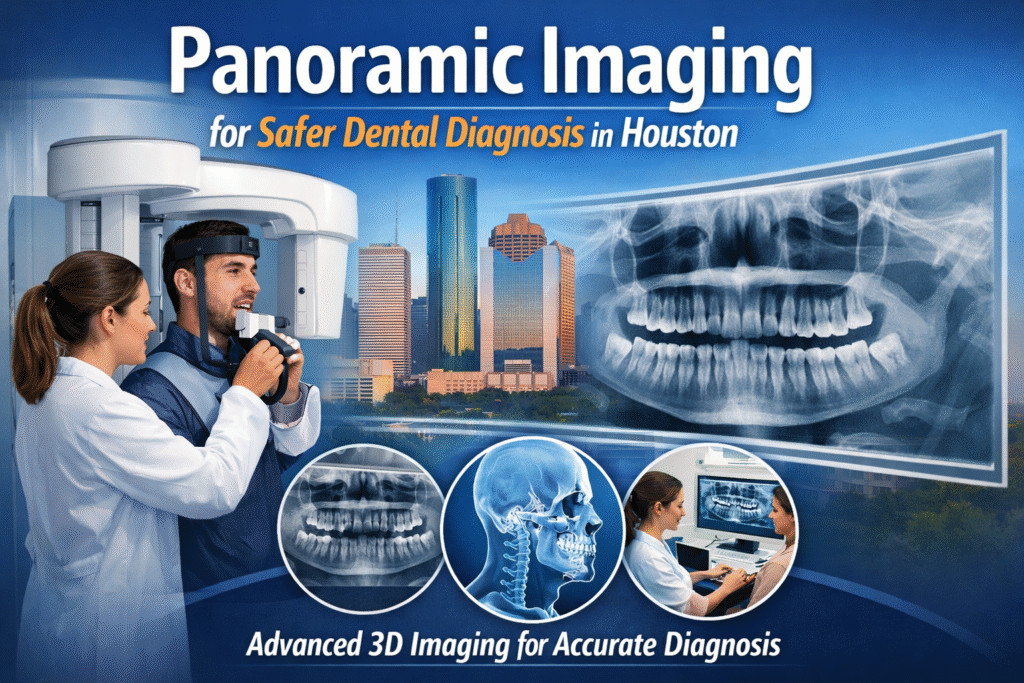
At Next Care Dental Houston, panoramic imaging plays an important role in evaluating oral health and planning treatments safely. This technology provides a complete image of the teeth, jawbone, nerves, and surrounding structures, helping dentists identify potential issues before they become serious problems.
What Is Panoramic Dental Imaging?
Unlike traditional dental X-rays that focus on a few teeth at a time, panoramic imaging captures a wide-angle view of the entire mouth in a single scan.
This type of imaging allows dentists to examine:
- The upper and lower jaw
- Tooth positioning and alignment
- Bone structure
- Impacted teeth
- Jaw joints and surrounding tissues
Because panoramic imaging reveals areas that standard imaging might miss, it is frequently used before procedures such as wisdom tooth removal, dental implants, or complex restorative treatments.
For many patients, this technology represents an important step toward safer and more accurate dental care.
Why Advanced Imaging Matters in Modern Dentistry
Dentists rely on detailed imaging to make informed treatment decisions. In many cases, oral conditions such as cysts, tumors, or hidden infections can develop without causing immediate symptoms.
Clinics that invest in advanced dental technology Westheimer residents can access are better equipped to detect these concerns early. High-quality imaging allows dentists to evaluate bone density, nerve placement, and underlying structures before beginning any procedure.
Early detection not only improves treatment outcomes but can also help patients avoid more complex dental issues in the future.
Mapping Nerve Proximity for Safer Procedures
One of the most important uses of panoramic imaging is identifying the position of major nerves in the jaw.
The lower jaw contains a nerve known as the inferior alveolar nerve, which runs through the bone and provides sensation to the lower lip and chin. When performing procedures such as wisdom tooth removal or dental implant placement, dentists must carefully evaluate the position of this nerve.
Through advanced nerve mapping, panoramic imaging helps dentists plan procedures while minimizing the risk of nerve injury.
This level of diagnostic precision improves patient safety and provides reassurance for individuals undergoing surgical dental treatments.
The Role of Expertise in Diagnostic Imaging
Technology alone does not guarantee accurate diagnosis. The interpretation of dental scans requires specialized training and experience.
At Next Care Dental Houston, Dr. Harsh Patel uses his background in Oral Pathology to analyze imaging results carefully. His residency training in Oral and Maxillofacial Pathology at the University of Maryland provides a deeper understanding of how diseases affect oral tissues and bone structures.
This expertise helps identify abnormalities that may not always be obvious during routine examinations. When combined with modern imaging technology, this diagnostic approach allows for more precise treatment planning.
Digital Imaging and Patient Safety
Another important aspect of modern dental diagnostics is reducing radiation exposure while maintaining image quality.
Many clinics now use digital x-rays Houston patients rely on for faster and safer imaging. Digital imaging systems produce detailed results while typically using significantly less radiation than older film-based systems.
These improvements are especially beneficial for patients who require repeated imaging during treatment planning or monitoring.
Digital technology also allows dentists to view images instantly, discuss findings with patients, and plan treatments more efficiently.
Supporting Patients Across the Houston Community
Advanced imaging technology is particularly valuable for patients who require complex dental procedures. Having access to modern diagnostics ensures that treatment plans are based on accurate and complete information.
Located in the 77063 area, Next Care Dental Houston serves patients throughout nearby neighborhoods who want reliable dental care supported by modern technology and professional expertise.
By combining advanced imaging tools with clinical experience, the clinic provides a comprehensive approach to diagnosing and treating oral health concerns.
Why Panoramic Imaging Improves Dental Care
Panoramic imaging offers several advantages for both dentists and patients:
- Provides a complete view of the teeth and jaw
- Helps detect hidden infections or abnormalities
- Supports safer surgical planning
- Improves diagnostic accuracy
- Allows early detection of potential oral health concerns
These benefits make panoramic imaging an important tool in modern dental care.
Panoramic Imaging FAQs
What is a panoramic dental scan used for?
A panoramic scan provides a full view of the teeth, jaw, and surrounding structures. Dentists use it to evaluate impacted teeth, jawbone health, and nerve positioning before certain dental procedures.
Is panoramic imaging safe?
Yes. Modern digital imaging systems are designed to minimize radiation exposure while still producing detailed diagnostic images.
Who may need a panoramic dental scan?
Patients who require wisdom tooth removal, dental implants, or evaluation of jaw conditions may benefit from panoramic imaging as part of their dental examination.
